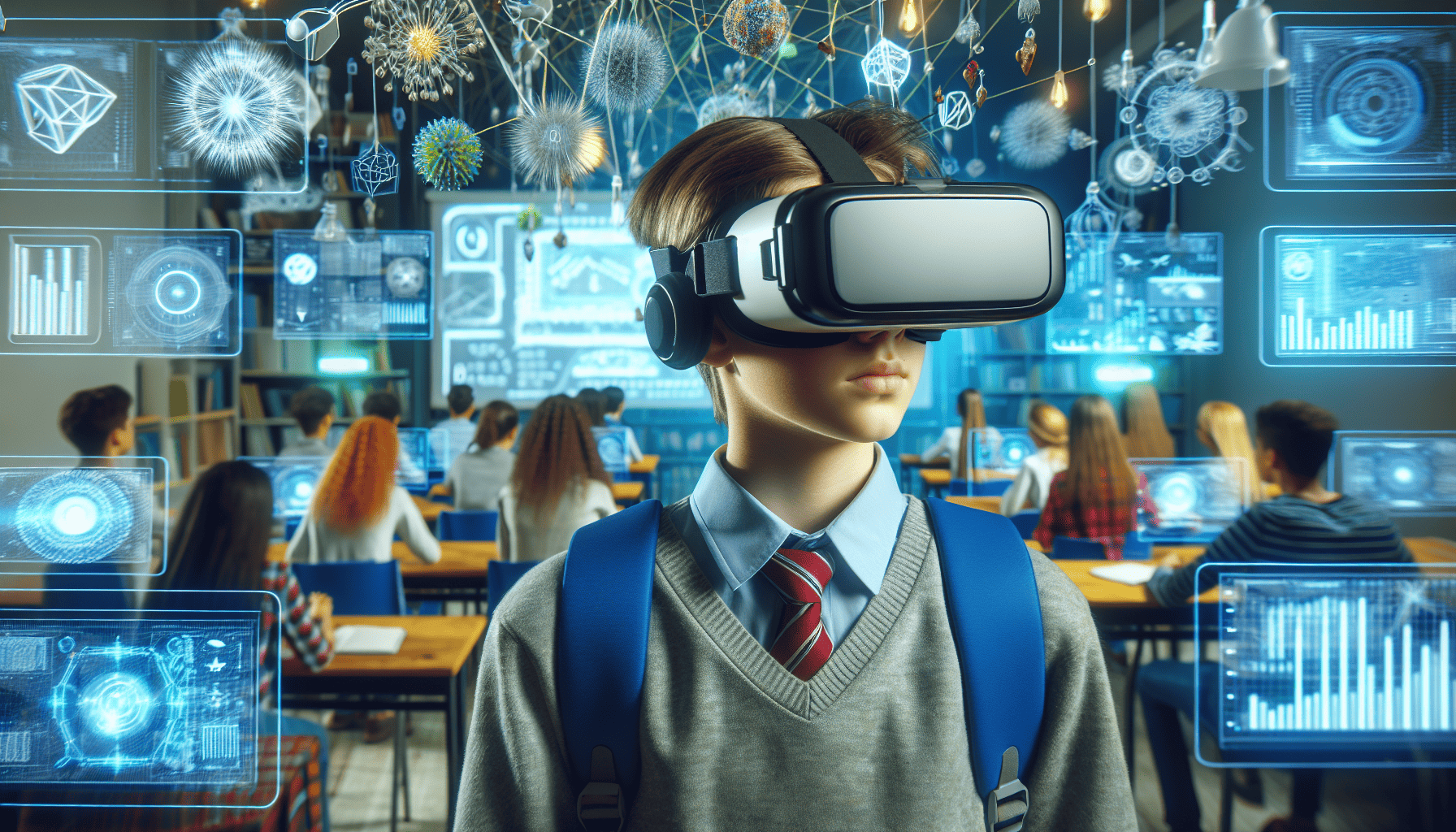
Virtual reality (VR) is emerging as a transformative force in the domain of online learning, offering a new dimension to educational experiences. This technology is not only enhancing the way we learn but also redefining the dynamics of education by providing immersive environments that engage students in ways traditional methods cannot.
One of the most significant advantages of VR in online learning is its ability to create immersive, hands-on experiences. In a VR classroom, students can explore environments that would otherwise be inaccessible. For instance, they can take a virtual walk through historical landmarks, dive into the ecosystem of a coral reef, or manipulate 3D models of complex molecules. This immersion fosters deeper understanding and retention of knowledge, as students can see and interact with the material rather than passively consuming information from textbooks or lectures.
Moreover, VR in online education facilitates safe and cost-effective learning environments. Medical students, for example, can practice surgeries or diagnose diseases in a virtual setting, gaining critical skills without the risk associated with real-life practice. Engineering students can assemble machinery or test structures virtually, saving resources and enabling experimentation without the constraints of the physical world. This approach not only enhances learning outcomes but also democratizes access to high-quality education by removing geographical and financial barriers.
Another key benefit of VR is its ability to cater to diverse learning styles. Some learners thrive on visual and kinesthetic experiences, which VR can provide in abundance. By allowing students to engage with content in a multi-sensory manner, VR can personalize education, making it more inclusive and effective. Additionally, VR environments can be tailored to individual learners' pace and preferences, offering customized challenges and support to optimize their learning journey.
Despite these advantages, the integration of VR in online education faces challenges. The initial cost of VR equipment and the development of specialized content can be prohibitive for some institutions. Additionally, there is a learning curve associated with using new technology, both for educators and students. However, as VR technology becomes more affordable and accessible, and as educational institutions gain expertise in its use, these barriers are likely to diminish.
Educators are increasingly acknowledging the potential of VR to transform the learning landscape. Forward-thinking institutions are already incorporating VR modules into their curricula, often in blended learning formats that combine traditional methods with cutting-edge technology. This hybrid approach ensures that students gain the benefits of both worlds – the in-depth exploration that VR offers alongside the irreplaceable value of face-to-face interaction and traditional pedagogies.
Looking to the future, VR is poised to become an integral part of online education. As technology continues to evolve, we can expect even more sophisticated virtual environments and interactive capabilities. With ongoing advancements, VR will not only support but also enhance collaborative learning, where students across the globe can work together in the same virtual space.
In conclusion, VR is set to revolutionize online learning by providing immersive, experiential, and accessible education. Although challenges remain, the potential of VR to engage students and enrich learning experiences is undeniable. As educators and institutions embrace this technology, the future of education looks exciting and full of possibilities, paving the way for a new era of empowered and informed learners.